

6 habits that prevent blackheads from disappearing
Blackheads may be common, but that doesn't make them any less annoying. You cleanse, squeeze, try strips, peels, scrubs, and so much more... and yet, they're still there.
The truth is, to deal with them, you don't need to do more and more. What's more important is consistency, the right approach, and stopping some seemingly harmless habits that actually fuel the problem.
Today, I will reveal more about blackheads, why they appear, what makes them worse, and what changes you should make if you want your skin to look cleaner and smoother.
What are blackheads?
In dermatology, we call blackheads "open comedones" and consider them a mild form of non-inflammatory acne.
But how exactly do they form?
Our skin is covered with millions of tiny pores, each containing a hair follicle and a sebaceous gland. The job of this gland is to produce sebum, which keeps the skin soft, protected, and hydrated.
The problem arises when the glands are too good at their job and produce too much sebum. This excess then mixes with dead skin cells that the skin naturally sheds, and this can form a "plug" that clogs the pore.
And when a clogged pore remains open, its contents come into contact with the air and oxidize. This is the same process by which a bitten apple darkens, and it's precisely what gives blackheads their dark color, hence their name.

Why do blackheads form?
The clogging of pores itself is only part of the picture. Other factors influence skin oiliness and susceptibility to comedones.
Hormones and stress
Studies show that hormones have a direct relationship with how much sebum the skin produces.
When androgen levels are higher, sebaceous glands become more active, increasing the risk of clogged pores. This is why blackheads often worsen during periods like puberty, around the menstrual cycle, or during other hormonal fluctuations.
Stress also matters because elevated cortisol can further stimulate oil production.
Skin type and genetic predisposition
With combination or oily skin, sebaceous glands are more active, creating better conditions for sebum accumulation and easier pore clogging.
The tendency for more active sebaceous glands, more pronounced oiliness, and easier formation of comedones often has a hereditary component.
Impaired skin renewal
For skin to appear clear, dead cells must shed normally from its surface.
Data shows that when this process is impaired and more keratin is formed, cells can get trapped in the pores and mix with sebum. This makes pores more easily clogged and creates conditions for blackheads to appear.
Diet, sugar, and hydration
Diet is not among the main causes of blackheads, but for some people, it definitely plays a role. A high-glycemic diet and foods with a lot of refined sugar can affect insulin levels, which in some people is linked to the growth of sebaceous glands, sebum, and keratin.
Insufficient hydration also doesn't help, because when skin is dehydrated, it can become more imbalanced and produce more oil.
Smoking, pollution, and harmful habits
Environment and daily habits can also have an impact.
Smoking, polluted air, frequent touching of the face, and dirty pillowcases can contribute to the accumulation of impurities and easier pore clogging.
6 habits that prevent blackheads from disappearing
Unfortunately, many of the things we do in an attempt to get rid of blackheads actually make them more persistent. Here are the habits that most often sabotage results.

1. Aggressive squeezing
As tempting as it may be, squeezing blackheads is rarely a good idea. Yes, it might provide that brief sense of satisfaction in front of the mirror, but in most cases, it doesn't solve the problem deeply – it even makes it worse.
Any aggressive squeezing of pimples and blackheads can cause micro-injuries to the skin. The pressure not only irritates tissues and damages capillaries but can also push bacteria deeper into the pores. This way, a small blackhead can easily turn into a painful, inflamed pimple.
Moreover, frequent squeezing can make the skin redder, uneven, and more sensitive, and acne scars that remain afterward are sometimes much harder to erase than the blackheads themselves.
2. Relying solely on quick, one-time solutions
Pore cleansing strips, vacuum devices, and various "blackhead masks." All of them can provide a visible short-term change, but the keyword here is short-term.
All these solutions remove the top "plug" of the blackhead without actually addressing its cause. Thus, sebum continues to be produced, pores continue to clog, and after 2-3 days, the blackheads are back where they started.
Additional risk: for more sensitive or dry skin, strips can irritate the skin and temporarily make pores more visible with repeated use.
Give your skin the care it deserves
Professionally formulated care with clinically proven results and attention to the skin microbiome.

3. Overdoing peels and aggressive cleansing
When skin feels oily, we instinctively start washing it more often.
The problem is that aggressive cleansing, especially with products containing alcohol or strong detergents, destroys the skin barrier and dries out the skin. And dry skin reacts with... more sebum. And that's how you get caught in a vicious cycle.
A similar logic applies to overly frequent physical peels. Scrubs can irritate the skin and disrupt its barrier, instead of helping.
4. Using unsuitable or comedogenic products
Not every cream, serum, or sunscreen is suitable for acne-prone and blackhead-prone skin. Some ingredients – certain oils, silicones, or waxy textures – can clog pores in oilier or combination skin. We're talking about so-called "comedogenic" ingredients here.
If your routine includes products unsuitable for you, blackheads will simply continue to form, regardless of what else you do.
5. Skipping ingredients that actually help
Not everything that claims to "cleanse" is effective for blackheads. If your routine lacks ingredients that actually help with clogged pores, results usually remain temporary.
6. Expecting instant results and changing products too quickly
Skin renews in cycles of about 28 days. And active ingredients need at least 6-8 weeks of consistent use to show real effects. Consequently, when you change your routine every 2-3 weeks because you "don't see a change," you don't give your skin a chance to adapt.
Frequent changes also add stress, and constantly introducing new formulas can irritate and destabilize the barrier.
Choose the perfect routine for your skin
Curated product combinations designed to work together – without overload.

How to remove blackheads the right way?
If you want to genuinely reduce blackheads, the focus shouldn't be on aggressive "removal," but rather on regular and well-chosen care that prevents excessive pore clogging.

Choose suitable ingredients
I recommend several ingredients to patients in the fight against blackheads:
|
Ingredient |
How it works |
Suitable for |
|
Azelaic acid |
Helps normalize keratinization, reduces the accumulation of dead cells in pores, and has anti-inflammatory effects |
Sensitive, combination, problem skin |
|
Niacinamide |
Supports sebum regulation and improves overall skin balance |
Oily, combination, sensitive skin |
|
Salicylic acid (BHA) |
Penetrates pores, dissolves excess sebum, and promotes deeper chemical exfoliation |
Oily, combination skin, with blackheads on the nose and T-zone |
|
AHA acids |
Exfoliate more superficially and help achieve a smoother texture |
Dry, dehydrated, rougher skin |
|
PHA acids |
A gentler option for chemical exfoliation |
Sensitive and easily irritable skin |
|
Retinol |
Accelerates skin renewal and helps with long-term comedones |
Skin that already tolerates active care and needs a stronger approach |
You don't need to use all actives simultaneously. Start with one and introduce it gradually. Layering too many actives is more likely to irritate the skin than help it.
Non-comedogenic care
If you want to reduce blackheads, there's no point in using active ingredients while simultaneously applying products that clog pores.
Your entire routine should be adapted to your skin type and needs. This applies not only to creams but also to cleansers, serums, sunscreens, and even makeup. Look for light textures and formulas labeled as non-comedogenic.
Gentle cleansing
Skin with blackheads needs a clean, but not depleted barrier.
Washing your face in the morning or only in the evening with a gentle cleansing product is usually enough to remove sebum, impurities, SPF residues, and makeup without over-drying the skin.
Gentle yet effective cleansing
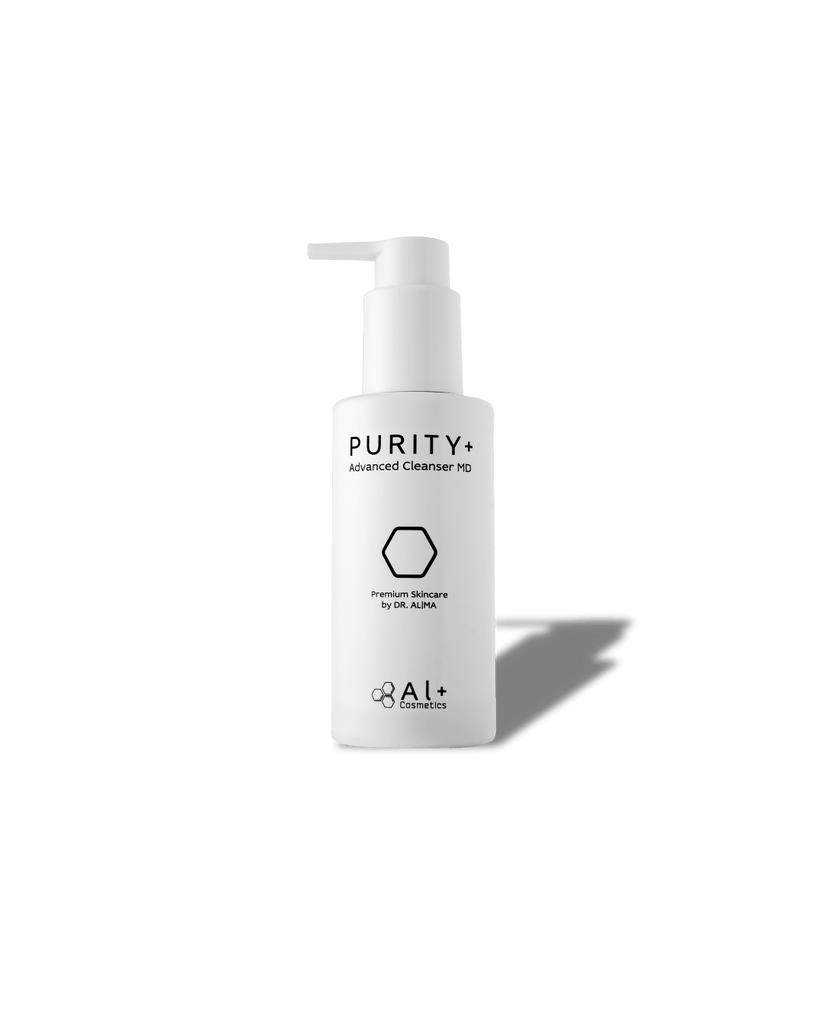
Enriched with niacinamide, squalane, and prebiotics, PurityX+ cleanses gently without over-drying, supporting a healthy skin barrier.
Professional care
Sometimes home care is not enough, especially if blackheads are deep, stubborn, or combined with other forms of acne. In such cases, professional care should be considered.
Among the procedures I most often recommend are:
- Professional cleansing / extractions - with proper technique, they can help safely remove stubborn comedones.
- Chemical peels - help exfoliate superficial layers and can reduce blackheads.
- Microdermabrasion - removes the outermost layer of cells and can help unclog pores.
Effective routine
When it comes to an effective routine, you don't need 10 steps. It's more important to build a good foundation first and only then build upon it.
Start with the most basic things:
- gentle cleansing product
- hydration
- SPF
By starting with these 3 steps, you ensure that you are doing the most important things for your skin. From then on, you can safely build up according to its needs.
My personal routine is also not complicated. It is divided into morning and evening care, with each step having a clear role.
Morning
- HydraX+ for hydration, nourishment, and comfort
- Sébula+ to finish the routine with 1–2 drops
- sunscreen as the last and essential step
Evening
- PurityX+ for gentle cleansing of the skin from makeup, sebum, and impurities
- Timeless+ as evening care
- Sébula+ as a final step and to "seal" the routine
As additional steps, I like to include ToniX+ when I want to better prepare the skin for subsequent products, and also LumiTech+ LED Mask when I need a little more targeted care and want to make my evening routine more complete.
Effective care starts with the right routine
Carefully selected product combinations, designed to work together for healthier, calmer, and clearer skin in the long term.
How often should you clean blackheads?
Facial cleansing should be daily - morning and evening. In the morning, just water can be enough, but in the evening, a gentle cleanser is necessary. As for active "blackhead cleaning," the better approach is regularity with low intensity, rather than rare and aggressive.
Chemical exfoliants (BHA) can be used 2-3 times a week for oilier skin at concentrations up to 2%.
When are blackheads a sign that your routine needs a change?
Blackheads don't always mean you're not taking proper care of your skin. But if they constantly return, become more visible, or aren't affected despite your efforts, it's usually a sign that something in your routine isn't working as it should.
Here are some clear signs that it's time to re-evaluate:
Blackheads return quickly, even though you care for your skin
If the effect is only temporary and pores get clogged again almost immediately, your routine most likely only affects the surface, not the root cause of the problem.
Your skin is both oily and dehydrated
This often happens when you use overly aggressive products. The skin starts to shine, but at the same time feels tight, sensitive, or irritated.
You feel that your pores are constantly clogged
If the skin doesn't look smooth even after cleansing and blackheads are most visible in the T-zone, this could be a sign that you're missing the right active ingredients or that you're using unsuitable products.
Inflamed pimples also appear
When painful, red pimples are added to blackheads, it often means that the pore clogging is already progressing to inflammation.
After cleansing, your skin appears more irritated, not cleaner
Redness, stinging, tightness, and a feeling of dryness are not a sign that the product "works," but rather that it may be too aggressive for you.
If you've already made the necessary changes to your routine, but blackheads continue to return or worsen, it's a good idea to consult a specialist. This will help you more easily understand what your skin specifically needs and what the most appropriate next step is.
Give your skin the care it deserves
Professionally formulated care with clinically proven results and attention to the skin microbiome.
FAQ
Is it bad to squeeze blackheads?
Yes, in most cases, it's not a good idea. Squeezing can irritate the skin, cause micro-traumas, and push impurities deeper into the pores. This way, a blackhead can easily turn into an inflamed pimple.
Why are blackheads most stubborn on the nose?
Because in this area, the sebaceous glands are more active, and the skin usually gets oilier. Additionally, the pores on the nose are often more visible, making blackheads more noticeable. That's why they appear most frequently and persist longer there.
Do blackhead strips work?
Strips can temporarily make blackheads less visible, but they don't solve the root cause of the problem. They remove surface buildup without stopping the pores from clogging again. This means the effect is short-term, not long-term.
Do hormones affect blackheads?
Yes, hormones can be directly related. When androgen levels rise, the sebaceous glands start producing more sebum, which increases the risk of clogged pores. That's why blackheads often intensify during puberty, around menstruation, or during other hormonal fluctuations.
Does comedogenic cosmetics cause blackheads?
For skin prone to clogged pores, yes - it can contribute. Some heavier or unsuitable formulas can trap sebum and dead cells in the pores. Therefore, it's good to choose non-comedogenic products and lighter textures.
When is home care not enough for blackheads?
If blackheads are very stubborn, deep, often inflamed, or do not respond despite a well-chosen and consistent routine, it's time to consult a specialist. A dermatologist or medical aesthetician can assess what exactly is contributing to the problem and what the most appropriate next step is.
DISCLAIMER: All skincare articles are intended to assist in education on specific ingredients and skincare topics. Our articles are written to be informative and educational. Any reference to a specific patient experience is not a medical offer for treatment. Please note that all Al+ Cosmetics products with listed ingredients are formulated for cosmetic use only and are NOT intended as substitutes for medical advice and/or recommendations for pharmaceutical products.


